Comparisons
Metal roof vs shingles
Cost, lifespan, noise, and what each roof does in snow, heat and hail — with an honest look at whether the payback ever arrives.
Updated
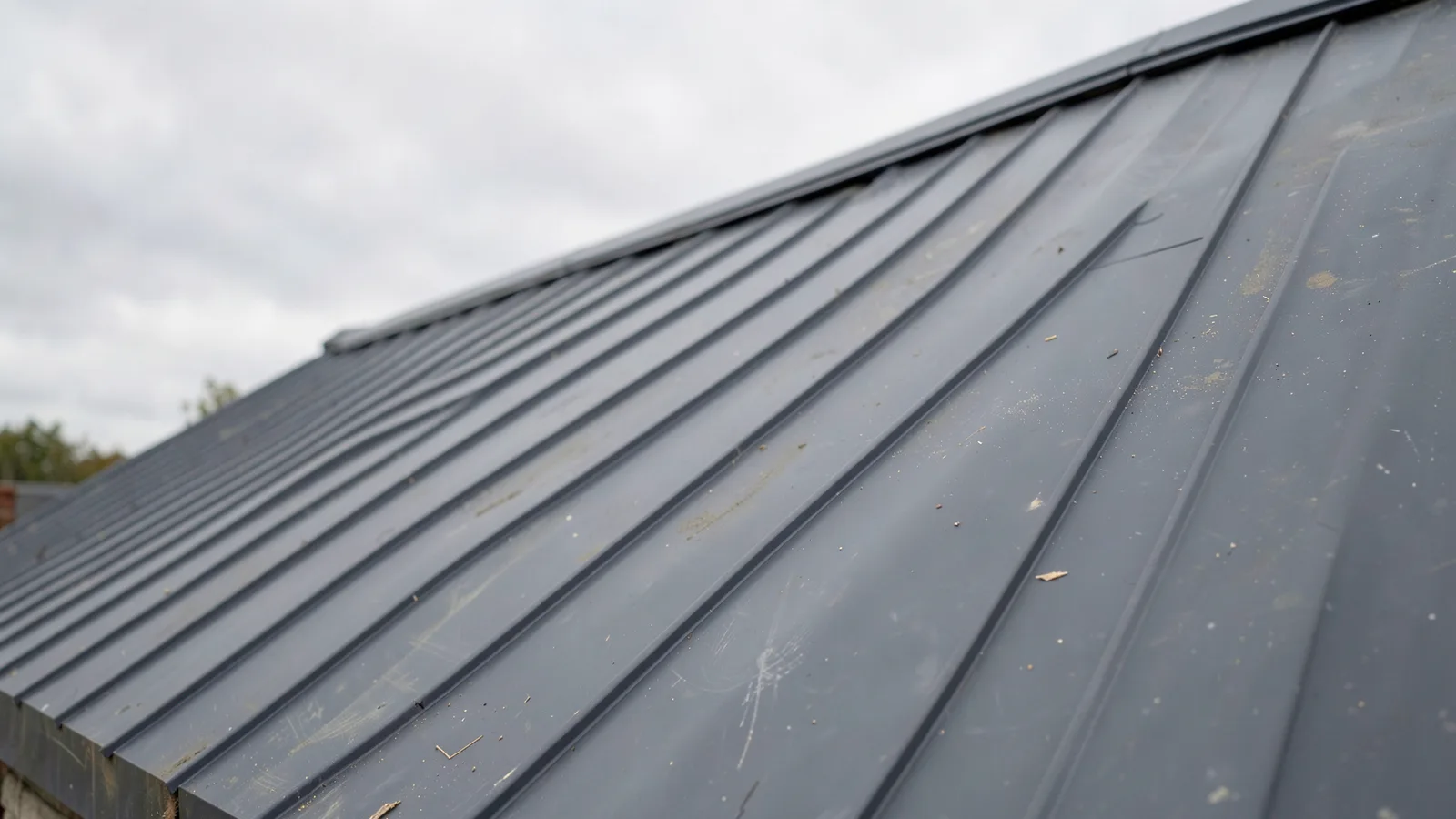
The short version: shingles win on cost, metal wins on lifespan, and the payback only arrives if you stay put.
A metal roof costs two to three times what shingles do and lasts two to three times as long. That is close to a wash on paper — so the decision usually turns on how long you are staying, and on what your climate does to roofs.
Side by side
| Asphalt shingles | Metal | |
|---|---|---|
| Installed cost | $450–$900 /square | $1,000–$2,000 /square (standing seam) |
| Lifespan | 25–30 yrs (architectural) | 40–70 yrs |
| Weight | 250–450 lb /square | 50–150 lb /square |
| Minimum slope | 2:12 | 1/4 :12 for standing seam |
| Hail | Damages, may need replacing | Dents, rarely leaks |
| Wind rating | 110–130 mph typical | 140+ mph typical |
| Fire rating | Class A with backing | Class A |
| Snow | Holds it | Sheds it, needs snow guards |
| Repairs | Easy, cheap, blends in | Specialist, panels come in runs |
| DIY realistic | Yes, with care | No |
| Recyclable | Rarely | Yes, and often recycled content |
Roof Pitch Calculator
Convert roof pitch to angle and slope percentage, find the pitch multiplier, and turn a building footprint into true roof area and rafter length.
Cost over fifty years
For a 20 square roof. This is the comparison that actually matters, and it is closer than the installed prices suggest.
| Shingles | Standing seam metal | |
|---|---|---|
| Installation | $12,000 | $28,000 |
| Replacement at ~28 years | $16,000 | — |
| Maintenance and repairs | $2,000 | $1,500 |
| Fifty-year total | ~$30,000 | ~$29,500 |
Over a full fifty years the two converge almost exactly. The difference is when you pay: shingles spread the cost across two roofs, metal front-loads all of it.
Which means the real question is not "which is cheaper" but "will I be here for the second roof?" If the answer is no, you are paying for a benefit the next owner receives — and roofs return only a fraction of their cost at resale.
Where each one wins
Shingles win on affordability and repairability. Half the up-front cost, any roofer can install them, and a damaged section is patched in an afternoon for a few hundred dollars. Colour and profile options are enormous.
They also win on complex roofs. Every hip, valley and dormer adds cut metal panels and custom flashing, and metal's cost premium grows with complexity far faster than shingles' does.
Metal wins on longevity and on weather. It sheds snow rather than holding it, it survives hail that would total a shingle roof, and it holds up in high wind. It weighs a fraction of shingles, which matters on an older structure. And a light-coloured or coated metal roof reflects solar heat, cutting cooling load in hot climates in a way shingles cannot.
It also wins on very low slopes. Standing seam goes down to a quarter-inch per foot, where shingles stop entirely at 2:12.
Not all metal roofing is the same product
Standing seam — concealed fasteners, panels formed on site — is the premium system and the one worth the money. Exposed-fastener corrugated panels cost roughly half as much, and are a genuinely different proposition: the neoprene washers on the screws are the weak point and need re-fastening every 10 to 20 years. When someone quotes "a metal roof", establish which one.
The things people worry about
Noise. Overstated. Over solid decking with underlayment, a metal roof is close to a shingle roof. The drumming people remember comes from bare metal over open purlins on a barn.
Lightning. Metal does not attract lightning. If struck it conducts the charge safely to ground and is non-combustible, which makes it marginally safer than shingles, not less.
Denting. Real, and worth knowing. Hail dents metal cosmetically, though it rarely causes leaks. Steel resists denting better than aluminium, and a standing seam with a striated or textured finish hides it far better than a flat pan.
Snow shedding. A genuine hazard rather than a worry. A metal roof releases accumulated snow suddenly and all at once. Anywhere it discharges over a door, walkway or driveway needs snow guards, and those are an installation cost people forget to budget.
Which to choose
Choose shingles if you may move within 20 years, the roof is complex, the budget is the binding constraint, or you want to be able to repair it cheaply.
Choose standing seam metal if this is your long-term home, your climate brings hail, high wind or heavy snow, the roof is simple in shape, or the slope is too shallow for shingles.
Consider metal over existing shingles if the deck is sound and code permits two layers — it removes the tear-off cost, which is one of the larger line items in a metal quote.
Common questions
Is a metal roof worth the extra cost?
It depends on how long you are staying. Metal costs two to three times as much and lasts two to three times as long, so the payback only arrives if you own the house for 25 years or more. Below that horizon, shingles are the better financial decision.
Are metal roofs noisy in rain?
Much less than people expect. A metal roof over solid decking and underlayment is close to a shingle roof in noise. The drumming people remember is from bare metal over open purlins on a barn, not from a residential installation.
Can you put a metal roof over shingles?
Often yes, and it is one of metal's advantages. Standing seam over a single layer of sound shingles avoids tear-off entirely, provided the deck is solid and local code allows two layers. It saves both the labour and the landfill fee.
Calculators for this
- Roof Pitch Calculator
Convert roof pitch to angle and slope percentage, find the pitch multiplier, and turn a building footprint into true roof area and rafter length.
Part of our roofing guide.
Reviewed by Quban, Construction estimator, on . How these numbers are checked.