Reference
Gravel coverage chart
Coverage per cubic yard and per ton at every common depth, plus weights for each aggregate type — the reference table for ordering gravel.
Updated
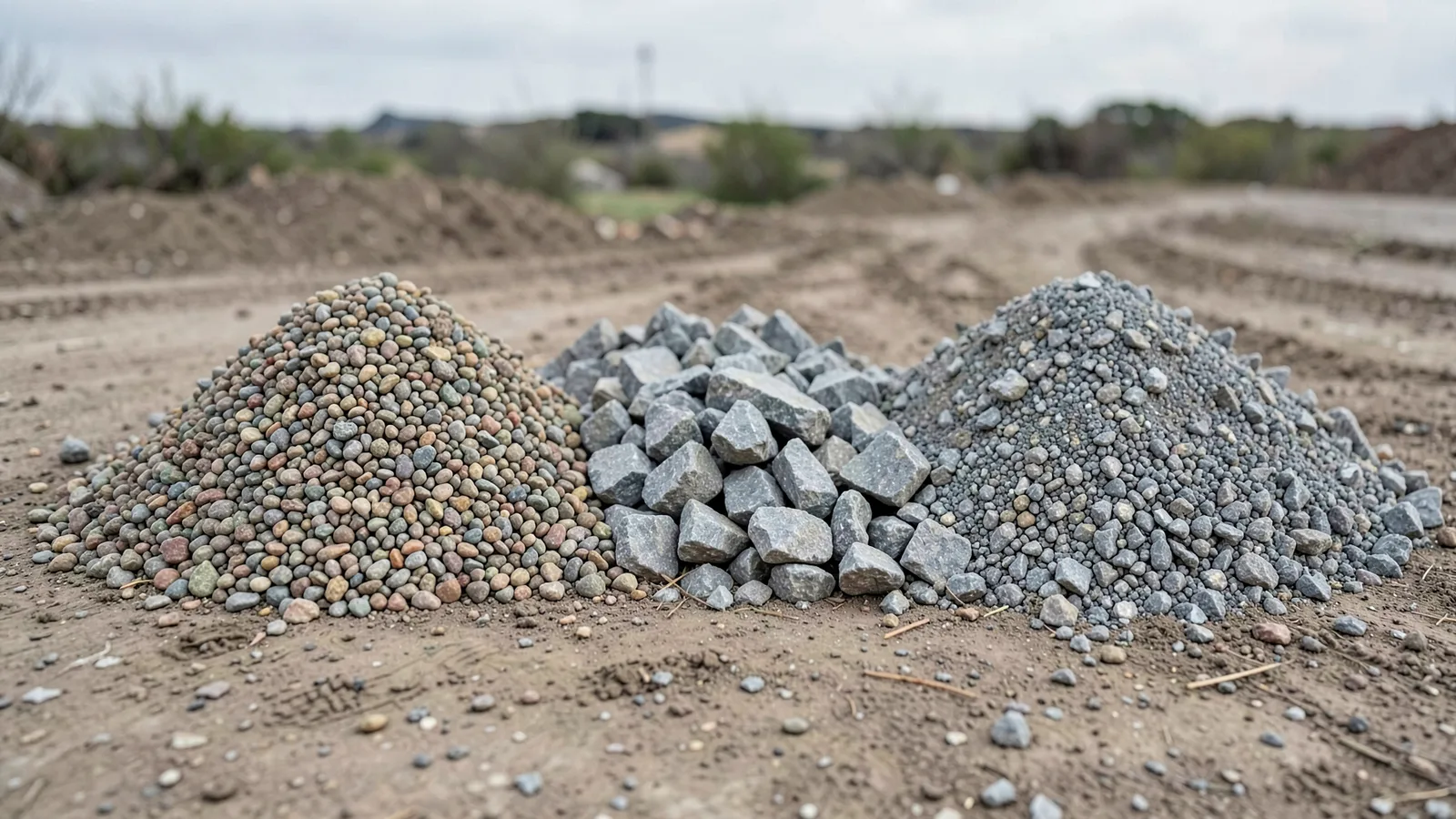
Everything you need to order gravel without doing the arithmetic. All figures are for the material alone, before any waste allowance.
Coverage per cubic yard
One cubic yard is 27 cubic feet, so coverage is simply 27 divided by the depth in feet.
| Depth | Coverage | Typical use |
|---|---|---|
| 1 in | 324 sq ft | Topping up existing gravel |
| 2 in | 162 sq ft | Garden beds, light paths |
| 3 in | 108 sq ft | Walkways, decorative beds |
| 4 in | 81 sq ft | Driveway surface layer |
| 5 in | 65 sq ft | Heavy-use path |
| 6 in | 54 sq ft | Driveway base, drainage trench |
| 8 in | 41 sq ft | Base over soft ground |
| 12 in | 27 sq ft | Deep French drain |
Coverage per ton
Assuming crushed stone at 100 lb per cubic foot. One ton is 20 cubic feet of it.
| Depth | Coverage per ton |
|---|---|
| 1 in | 240 sq ft |
| 2 in | 120 sq ft |
| 3 in | 80 sq ft |
| 4 in | 60 sq ft |
| 6 in | 40 sq ft |
Weight by aggregate type
Density is the figure that varies most between materials, and it is what makes a tonnage quote meaningful or misleading.
| Material | lb per cu ft | Tons per cu yd | Cubic yards per ton |
|---|---|---|---|
| Lava rock | 45 | 0.61 | 1.65 |
| Crushed stone #57 | 100 | 1.35 | 0.74 |
| Crushed limestone | 100 | 1.35 | 0.74 |
| Pea gravel | 105 | 1.42 | 0.71 |
| River rock | 105 | 1.42 | 0.71 |
| Crusher run | 105 | 1.42 | 0.71 |
| Decomposed granite | 110 | 1.49 | 0.67 |
Ask your supplier for their figure
These are representative values. Aggregate density varies with the parent rock, the grading and how wet it is when weighed, so a local quarry's own number can differ by 5–10%. Where you have theirs, use theirs.
Compaction allowances
Base material is bought loose and compacted in place, so the volume you order is larger than the finished layer.
| Material | Compaction factor | Order this much extra |
|---|---|---|
| Crusher run / dense grade | 1.22 | 22% |
| Crushed limestone base | 1.20 | 20% |
| Decomposed granite | 1.18 | 18% |
| Crushed stone #57 (not compacted) | 1.00 | none |
| Pea gravel, river rock | 1.00 | none |
Gravel Calculator
Work out how many cubic yards or tons of gravel you need for a driveway, path or drainage bed — with the density for each aggregate type shown in full.
Quick conversions
- 1 cubic yard = 27 cubic feet
- 1 cubic yard of crushed stone ≈ 1.35 tons ≈ 2,700 lb
- 1 ton of crushed stone ≈ 0.74 cubic yards ≈ 20 cubic feet
- 1 US ton = 2,000 lb exactly
- To convert inches of depth to feet, divide by 12
Common questions
How much does a cubic yard of gravel weigh?
About 2,700 lb, or 1.35 tons, for crushed stone at 100 lb per cubic foot. Decomposed granite is heavier at roughly 1.49 tons per cubic yard, and lava rock is far lighter at about 0.61 tons.
How many cubic feet are in a cubic yard?
Twenty-seven. A cubic yard is 3 ft × 3 ft × 3 ft, and that number appears in every gravel calculation because area and depth are measured in feet while gravel is sold by the yard.
Calculators for this
- Gravel Calculator
Work out how many cubic yards or tons of gravel you need for a driveway, path or drainage bed — with the density for each aggregate type shown in full.
Part of our driveways guide.
Reviewed by Quban, Construction estimator, on . How these numbers are checked.